What Is an EICR and When Do You Need One?
What Is an EICR and When Do You Need One?
An Electrical Installation Condition Report (EICR) is an assessment of the condition of the electrical installation within a property.
Whether you're a homeowner, landlord or responsible for a commercial property, an EICR can help identify electrical defects, deterioration and potential safety issues before they become more serious.
What is an EICR?
During an EICR, the electrical installation is inspected and tested to identify damage, deterioration, defects or other issues that could affect electrical safety.
This includes checking items such as the consumer unit, wiring, protective devices, earthing and bonding, and a representative sample of electrical accessories.
The purpose isn't simply to produce a certificate. A properly carried out EICR should give you a clear picture of the condition of the electrical installation, identify any areas that require attention and provide useful information about any improvements that may be recommended.
When Do You Need an EICR?
There are a number of reasons why you may need, or choose to have, an EICR carried out.
Homeowners
An EICR can be useful if the electrical installation has not been inspected for some time, particularly in an older property, or if you are planning significant alterations or electrical work.
It can also provide useful information when buying a property where the condition or history of the electrical installation is unknown.
Landlords
Private rented properties in England are subject to electrical safety requirements, including periodic inspection and testing of the electrical installation.
The required interval is generally at least every five years, although an earlier inspection may be specified on the previous report.
Commercial Properties
Businesses have responsibilities for maintaining their electrical installations so they remain safe.
Periodic inspection and testing can form an important part of this maintenance and can identify deterioration or defects before they become more serious.
An EICR may also be recommended following significant damage, flooding, fire, alterations to a property, or where there are concerns about the condition or safety of an existing electrical installation.
What Happens During an EICR?
An EICR involves both a visual inspection and electrical testing of the installation. This will usually require the electricity to be switched off at various points while testing is carried out.
The inspection typically includes the consumer unit, earthing and bonding arrangements, wiring systems and a representative sample of sockets, switches, light fittings and other accessible electrical accessories.
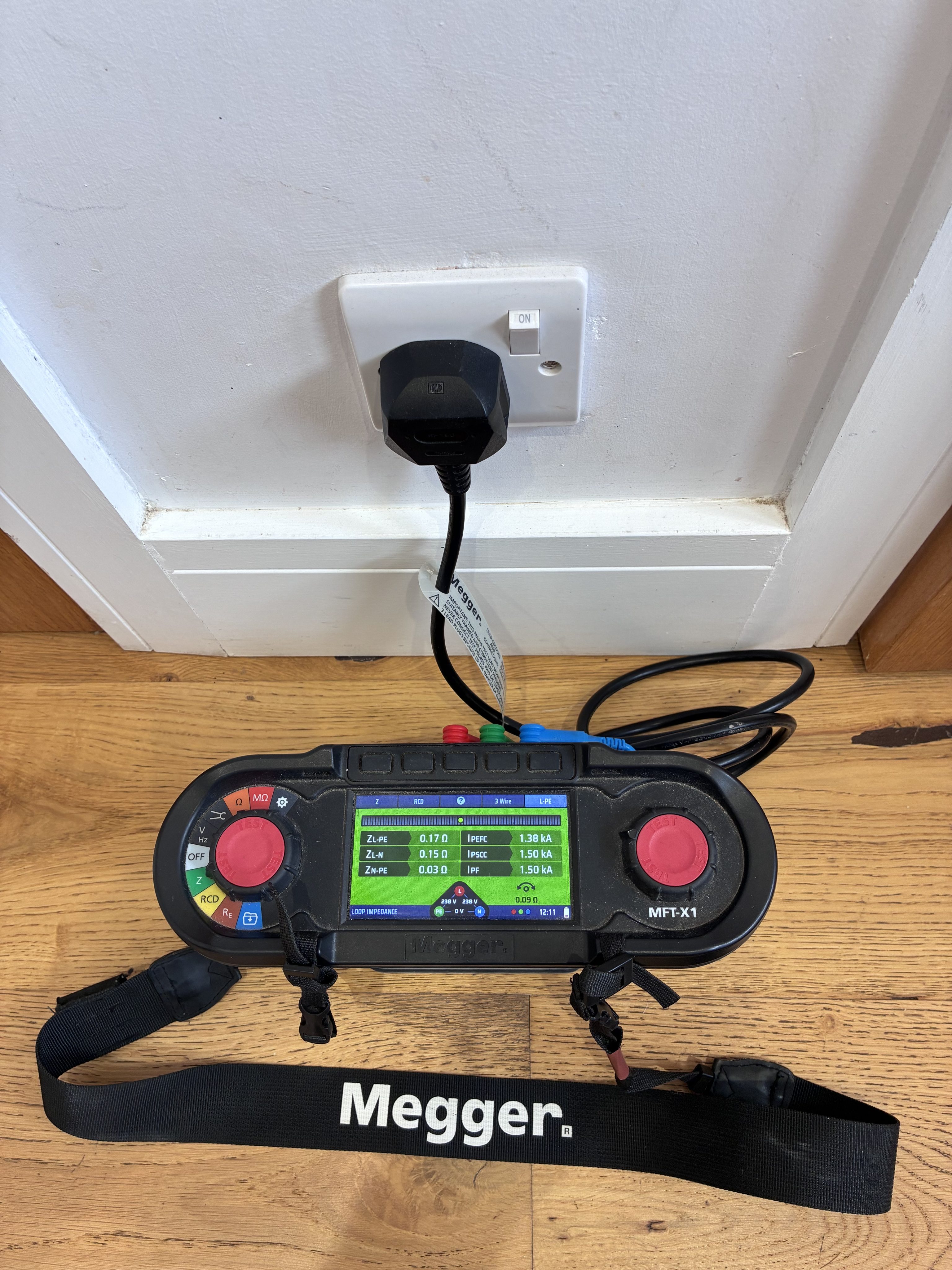
Electrical tests are then carried out to check important safety measures such as the continuity of protective conductors, insulation resistance, polarity, earthing arrangements and the operation of RCDs and other protective devices.
It is important to understand that an EICR is a condition report rather than a service or repair visit. If defects are found, they will be recorded on the report and explained to you. Remedial work can then be discussed separately where required.
Some disruption is unavoidable because circuits need to be isolated for testing, but we aim to keep this to a minimum and will discuss anything that may be particularly sensitive to losing power before testing begins.
What Do the EICR Codes Mean?
If an issue is identified during the inspection, it may be given an observation code on the report.
C1 – Danger Present
A C1 indicates that there is an immediate danger and action is required to make the situation safe.
C2 – Potentially Dangerous
A C2 indicates that a defect or condition has been identified which could present a danger and remedial work is required.
C3 – Improvement Recommended
A C3 is not classed as an immediate or potential danger, but an improvement to the installation is recommended.
FI – Further Investigation Required
An FI is recorded where something has been identified that requires further investigation to determine whether a safety issue exists.
An EICR containing a C1, C2 or FI observation will normally receive an unsatisfactory overall assessment. C3 observations alone do not make an EICR unsatisfactory.
What Isn't Included in an EICR?
An EICR is primarily concerned with the fixed electrical installation within the property. It isn't a test of every electrical appliance or piece of equipment connected to it.
For example, where a cooker is connected to a fixed electrical circuit, the circuit can be inspected and tested as far as its connection point, but the correct operation or internal condition of the cooker itself isn't normally part of the EICR.
Portable appliances and other electrical equipment are also outside the normal scope of an EICR.
Items which cannot be safely accessed, including equipment at height, concealed wiring and inaccessible parts of the installation, may also be excluded unless access has been agreed beforehand.
Equipment belonging to the electricity supplier, such as the electricity meter, incoming supply cable and service cut-out, is not normally electrically tested as part of an EICR, although its visible condition may be noted where appropriate.
Any agreed limitations to the inspection will be recorded on the report.
What Happens if Problems Are Found?
Finding defects doesn't necessarily mean that the entire electrical installation needs replacing.
Electrical installations are often made up of work completed at different times and to different versions of the Wiring Regulations. An older installation is not automatically unsafe simply because it does not meet every requirement that would apply to a new installation today.
Where defects are identified, we will explain what has been found and why it has been recorded.
Where remedial work is required, we can discuss the available options and provide advice on the most appropriate way to address the issues.
What Will You Receive?
Following the inspection and testing, you will receive an Electrical Installation Condition Report detailing the installation that has been inspected, the results of the electrical tests and any observations that have been identified.
The report will state whether the overall condition of the installation is considered satisfactory or unsatisfactory for continued use.
At Yeo Electrical, we believe an EICR should be useful to the person receiving it. If defects or recommendations are recorded, we'll explain what they mean and answer any questions you may have about the report.
Need an EICR?
If you're a homeowner, landlord or business and would like to arrange an EICR, or you're unsure whether your electrical installation should be inspected, please get in touch.
Yeo Electrical provides electrical inspection and testing across the South West, with thorough testing, clear reporting and straightforward advice.